Articles & Papers.
Coming Soon
Untitled — In Preparation
A forthcoming paper on computational methods in digital pathology. Check back for updates.

Perspective
No Progress Without Problems: Knowledge Creation and Responsible AI
Generative AI is advancing rapidly, bringing both powerful capabilities and genuine risks that cannot be ignored. This article argues that progress depends on confronting these problems through knowledge creation and responsible development, ensuring AI systems are built with transparency, safety, and human oversight at their core.
Original Research
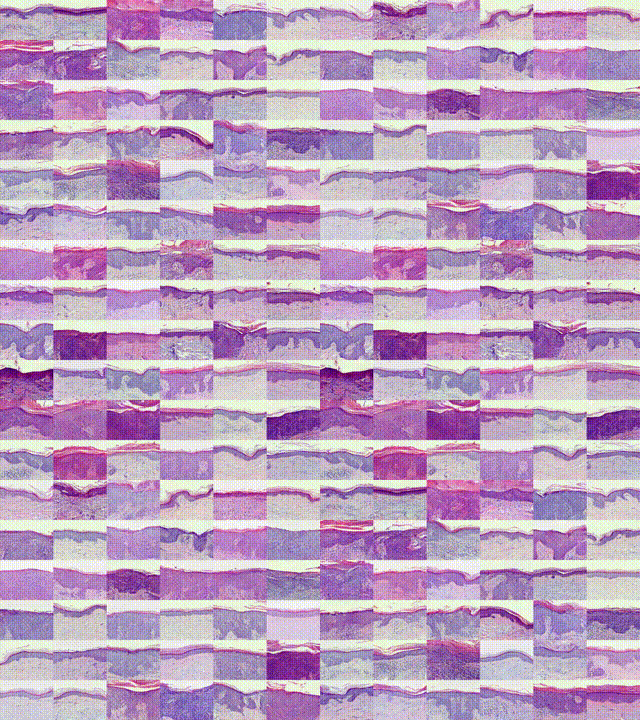
Representation Learning for Non-Melanoma Skin Cancer using a Latent Autoencoder
Generative learning offers powerful tools for representation learning in biomedical imaging, though faithfully reconstructing complex histological images remains challenging. By combining autoencoders with adversarial latent autoencoders for intra-epidermal carcinoma, we improve reconstruction quality and representation benchmarks, demonstrating smooth, realistic interpolations of tissue morphology and highlighting the promise of generative representation learning in computational pathology.
Original Research
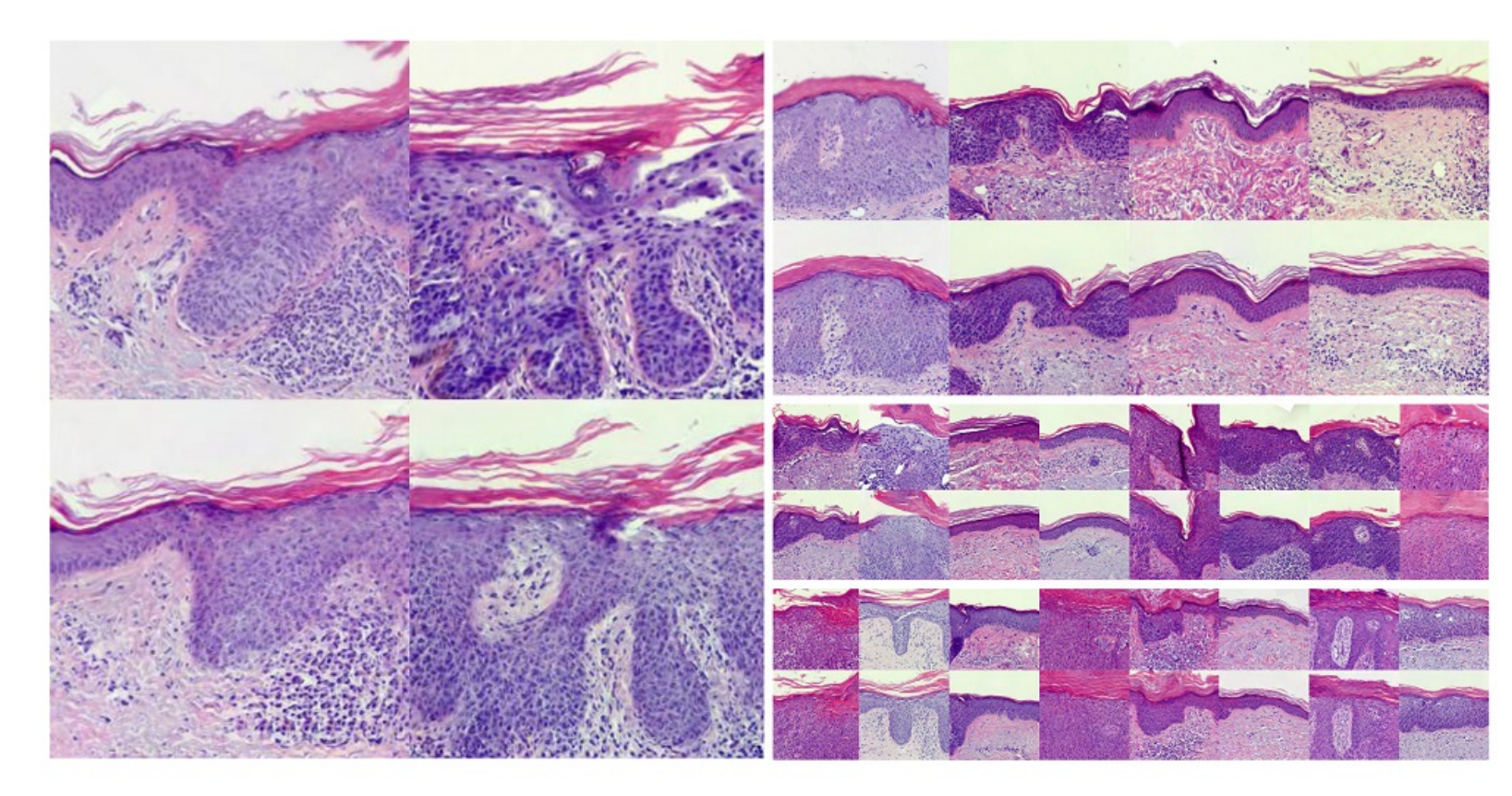
Towards Highly Expressive Machine Learning Models of Non-Melanoma Skin Cancer
Pathologists naturally pair images with descriptive terminology, and recent machine learning advances now allow these modalities to be jointly modeled. By applying discrete modeling techniques to intraepidermal carcinoma histology, we generate high-resolution reconstructions and natural language descriptions that provide interpretable, pathologist-aligned insights, moving toward systems that are both predictive and scientifically illuminating.
Original Research
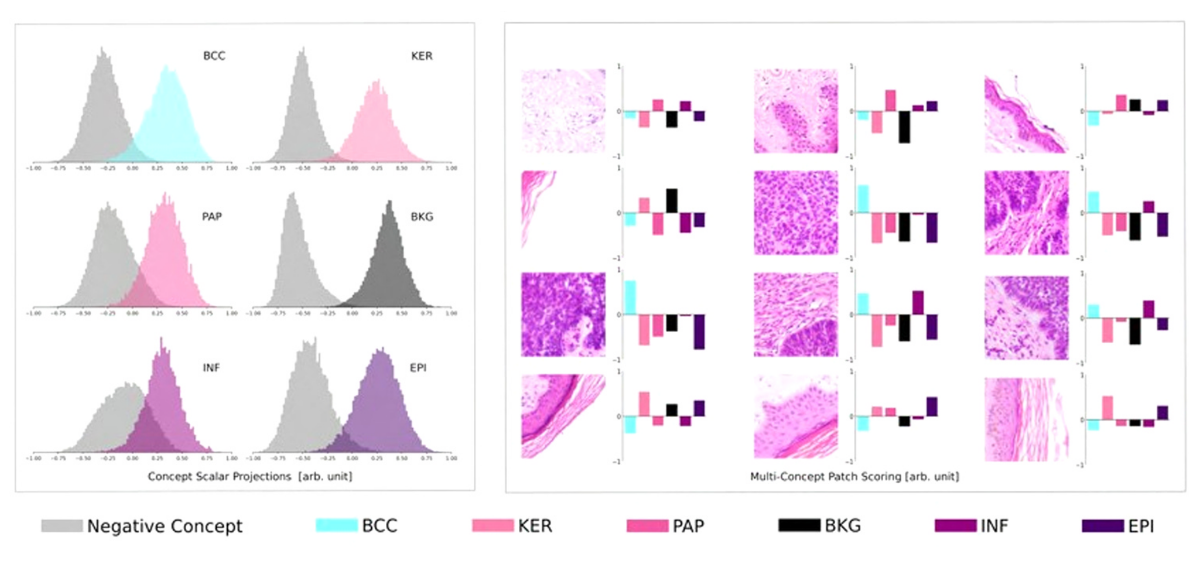
Characterization of tissue types in basal cell carcinoma images via generative modeling and concept vectors
Machine learning holds growing promise as a decision support tool for pathologists, but interpretable implementations are essential for trust and effective use. By applying generative models to basal cell carcinoma histology, we extract feature-rich latent vectors that enable high-accuracy classification and semantically meaningful “conceptual summaries,” producing outputs that characterize tissue in a pathologist-like, interpretable manner.
Original Research
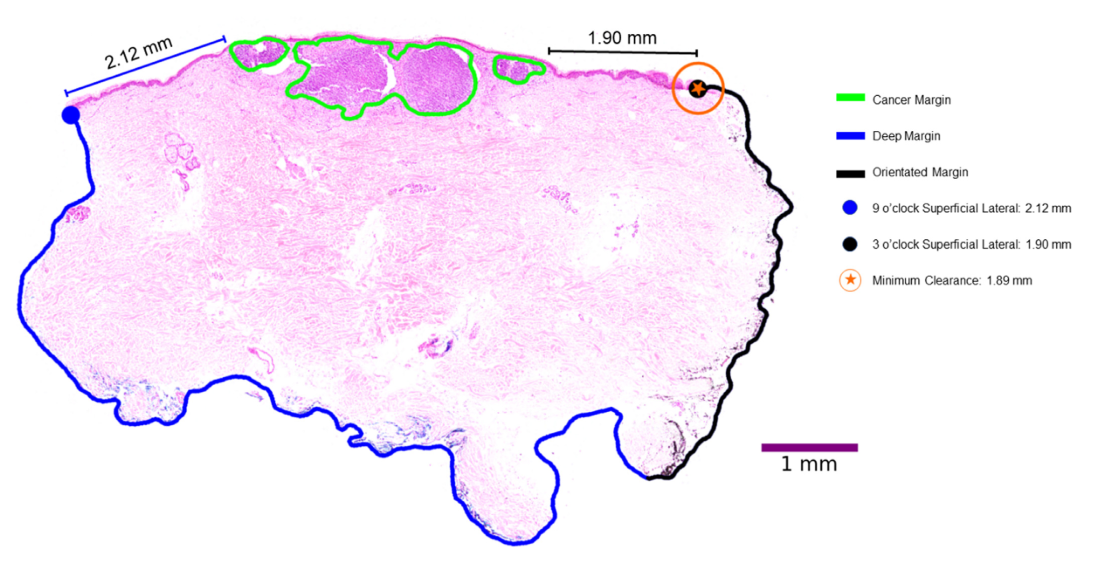
Interpretable deep learning systems for multi-class segmentation and classification of non-melanoma skin cancer
The application of interpretable deep learning to the three most common skin cancers, showing that the majority of dermatopathology work can be analyzed automatically while preserving high accuracy (93.6–97.9%). By classifying tissue into 12 meaningful dermatological classes and representing the skin’s layered structure, the network produces outputs that mirror a pathologist’s reasoning, offering both performance and interpretability.

Opinion Piece
Pathologist Versus Artificial Pathologist: What Do We Really Want (Need) From Machine Learning
Machine learning in digital pathology shows remarkable promise, yet current systems remain far from
fully “pathologist-level,” as they simplify complex diagnostic reasoning into narrow classifications.
By grounding development in the reality of what pathologists do and focusing on interpretability,
we can build AI tools that not only enhance clinical workflows but also deepen our understanding of
disease.
 Areté Informatics